Winter's Silent Home Wrecker: The Frost Line Explained
Why Frost Lines Matter: What They Do to Your Foundation & Why You Should Care Now
Every year in cold climates, a hidden threat slowly works its way into the soil beneath your home — one that can silently damage its foundation and threaten your property’s structural integrity. This threat is the frost line, and understanding how it works could save you thousands in repairs and protect your home’s value.
What Is the Frost Line?
The frost line — also called the frost depth — is the deepest point in the ground that soil water will freeze in winter. This depth varies by region and climate, but where temperatures dip below freezing, frost can push well below the surface.
When soil water freezes, it expands by about 9% in volume. That expansion generates enormous upward force in the ground — and anything resting above it, like your home’s footings, slab, or foundation walls, can be affected.
How Frost Lines Damage Foundations
At its core, frost damage to foundations happens through a process called frost heave:
Frost Heave Explained:
When water in the soil freezes, it doesn’t just turn to ice — it pulls more water toward the freezing front, forming ice lenses that expand the soil upward. That movement pushes against the foundation.
Here’s why that’s a problem:
-
Uneven Lifting: Soil freezing isn’t perfectly uniform. One section might rise more than another, putting uneven stress on footings and slabs.
-
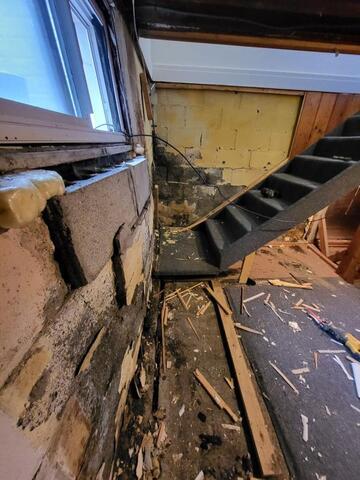
Cracks & Gaps: This upward push can crack concrete, open wall and floor joints, or send basement walls bowing inward.
-
Foundation Shift: Over repeated freeze–thaw cycles, even small movements accumulate, leading to significant structural shifts.
In fact, engineers design foundations to sit below the frost line precisely to avoid these freezing-and-expanding pressures on your structure.
See it in action: What Does Frost Line Do To A Foundation
Signs Frost Damage May Be Happening
Even if you can’t see the frost line, you can see its effects. Homeowners should watch for:
✔ Cracks in basement walls or slab
✔ Uneven or sloping floors
✔ Drywall cracks or separation at corners
✔ Sticking doors and windows
✔ Exterior walls or chimneys tilting or bowing
These are all classic signs your foundation is under stress — and frost heave is a common culprit in cold regions.
Why You Should Act Now
1. Damage Only Gets Worse
Frost heave isn’t a one-time event — every winter cycle can worsen cracks, destabilize walls, and eventually compromise the structural safety of your home.
2. Repairs Are Costly
Foundation remediation — like underpinning, pier installation, or crack repair — can cost far more than preventative measures like proper grading, drainage fixes, or insulation.
3. Insurance Often Doesn’t Cover It
Many policies exclude frost and soil movement unless directly caused by a sudden, identifiable event, which means you could be on the hook for repairs yourself.
Final Thought: Don’t Wait for Spring
By the time frost heave shows itself in cracks and misalignments, the damage may already be happening beneath the surface. Understanding the frost line and taking action before winter sets in can protect not just your foundation, but your entire home investment.
If you’re noticing signs of movement — or your home was built above the local frost depth — it’s time to talk to a foundation expert before small issues turn into costly repairs.